When something breaks, related alerts now arrive as one Problem with the likely root cause marked, so your team investigates one incident instead of many. The new Problems page in Atatus AI SRE lists every problem across your services and infrastructure in one place.
Atatus links issues that fire in the same window on services that call each other, or on the same host, pod or workload, and tags each one as root cause or symptom. Each problem shows the entities it affects and the metrics that matter for them, so you can judge the impact without opening other dashboards. The Problems docs explain how it works.
What the Problems page gives you
- One list of problems: Filter active, acknowledged and resolved problems by status, severity, impact and problem type, and follow a trends chart of active, opened and resolved problems over time.
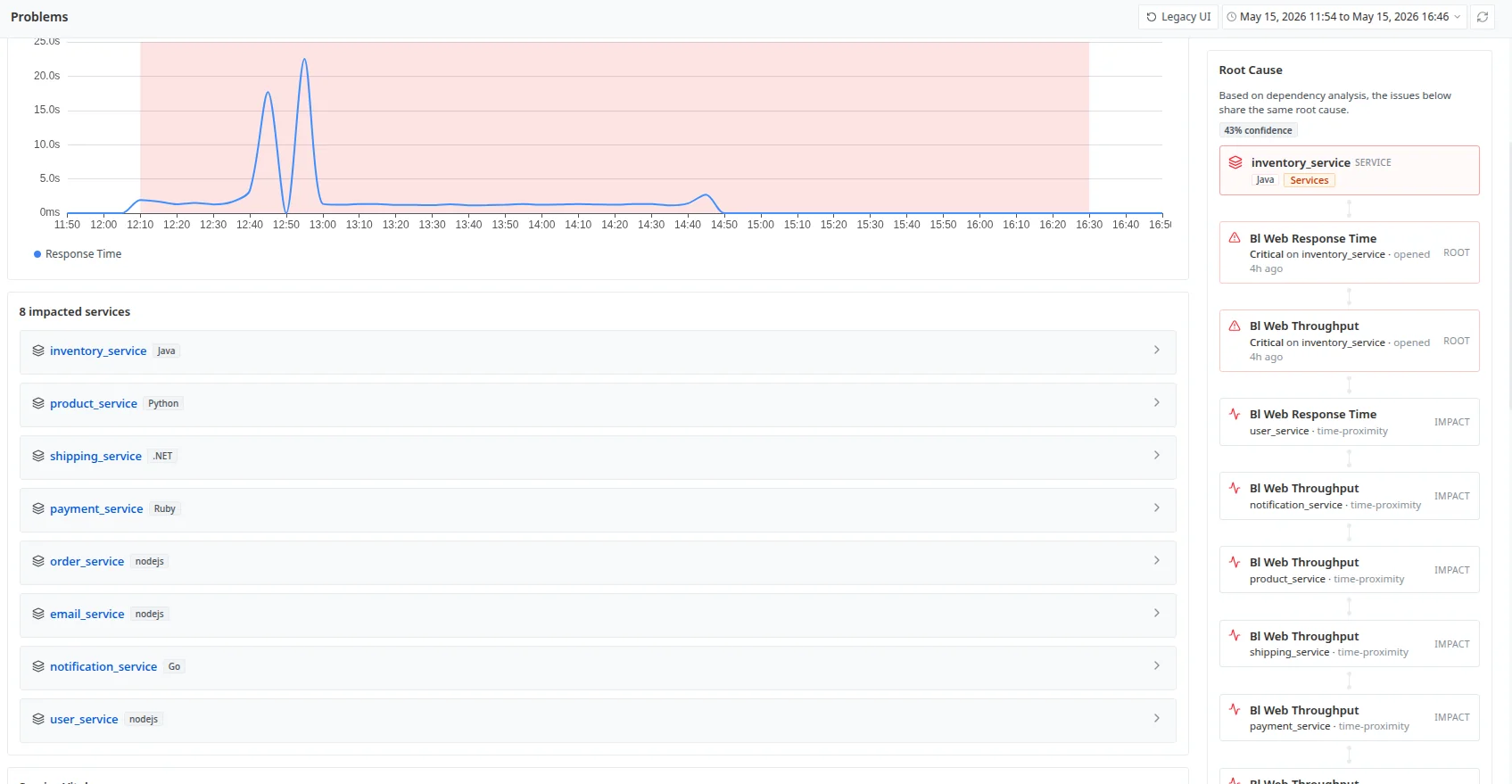
- Automatic correlation: Related issues are linked by how the affected services connect and when the issues fired, so two engineers don't chase the same failure. A diagram shows the entities involved and marks the root cause.
- Root cause and symptoms: Each correlated issue is tagged as root cause or symptom, and the Detected Root Cause panel shows the entity Atatus has confirmed as the source.
- Baseline deviation context: For issues raised by baseline rules, the issue view shows the triggered value, the learned baseline, the deviation and the expected range.
- Metrics for what is affected: Service problems show response time, throughput, error rate, Apdex and the slowest endpoints, queries and remote calls. Kubernetes problems show a diagnosis, container state and top warning reasons.
- Acknowledge and resolve: On-call engineers can acknowledge, comment on, resolve and re-open a problem, keeping incident notes in one place. Rules and notification channels are set up in Alerting.